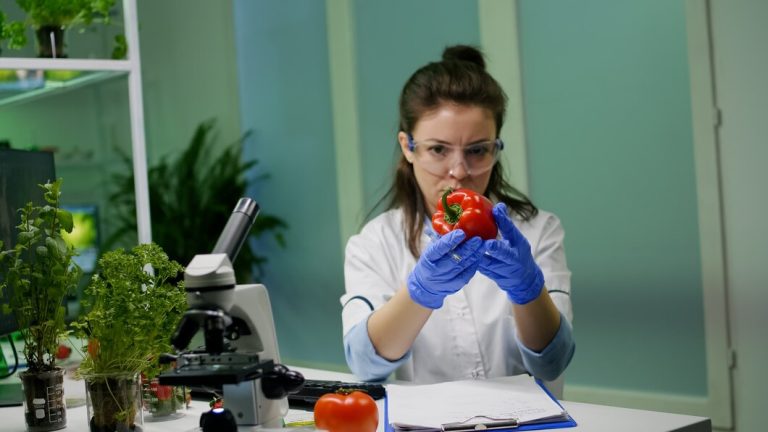
The debate around AI nutrition coach vs human dietitian is becoming increasingly relevant as artificial intelligence enters the world of health and nutrition. People can now use an AI nutrition coach to receive meal suggestions, track food intake, create shopping lists, and develop a personalized diet plan within minutes. At the same time, a human dietitian offers professional expertise, individualized assessment, communication, and clinical judgment that technology cannot fully reproduce. Both approaches can support personalized nutrition, but they work in fundamentally different ways.
The growth of AI personalized nutrition has made digital tools more accessible to people who want convenient nutrition guidance. A digital nutrition coach, virtual nutrition coach, or AI dietitian can analyze information entered by a user and generate recommendations based on selected goals and preferences. Human professionals, meanwhile, can consider factors that may be difficult for an algorithm to understand, including medical history, lifestyle circumstances, personal experiences with food, cultural preferences, and changing health needs.
So, which approach is better? The answer depends on the individual, the complexity of their needs, and the type of support they expect. Understanding the difference between these two approaches can help you decide whether AI nutrition coaching, human support, or a combination of both is appropriate.
What Is an AI Nutrition Coach?
An AI nutrition coach is a software-based tool that uses artificial intelligence to provide nutrition-related recommendations, education, tracking, and planning.
Depending on the platform, users may enter information such as:
- Age and general demographic information
- Food preferences
- Dietary patterns
- Fitness goals
- Activity levels
- Food intake
- Allergies or food restrictions
- Weight-related goals
- Sleep and lifestyle information
The system can then use that information to generate recommendations.
For example, an AI platform might create an AI personalized nutrition plan for someone who wants high-protein meals, follows a vegetarian diet, and has limited time for cooking.
Some tools also provide AI meal planning, grocery suggestions, recipe recommendations, reminders, and nutrition tracking apps that monitor eating patterns.
One of the biggest advantages of an AI system is speed. A user can receive suggestions almost immediately rather than scheduling an appointment and waiting for a consultation.
However, AI recommendations depend heavily on the information provided and the quality of the underlying system. An AI tool may identify patterns in data, but it does not have the same professional relationship, clinical reasoning, or real-world human understanding as a qualified dietitian.
What Is a Human Dietitian?
A human dietitian is a qualified nutrition professional who provides individualized nutrition advice based on education, professional training, and the requirements of their scope of practice.
A dietitian may assess dietary habits, discuss lifestyle factors, review relevant health information, establish nutrition goals, and develop customized nutrition plans.
Unlike a purely digital system, a human professional can have a conversation with the client and ask follow-up questions when something is unclear.
For example, a client might say that they cannot follow their diet plan consistently. A human dietitian can explore why. Perhaps the meals are too expensive, the cooking requirements are unrealistic, family preferences are creating difficulties, or the client is experiencing emotional challenges around eating.
This type of interaction is one of the major strengths of human nutrition counseling.
A dietitian can also modify recommendations as circumstances change rather than simply generating another response from a fixed set of user inputs.
AI vs Dietitian: How Do They Compare?
The central question in AI vs dietitian comparisons is not necessarily which one is universally superior. Instead, it is about what each approach does well.
| Factor | AI Nutrition Coach | Human Dietitian |
| Accessibility | Available digitally, often anytime | Requires appointment or availability |
| Speed | Immediate responses | Consultation-based |
| Personalization | Based on entered data and algorithms | Based on assessment and conversation |
| Meal planning | Can generate plans quickly | Can create tailored plans based on individual needs |
| Human interaction | Limited or simulated | Direct personal interaction |
| Emotional understanding | Limited | Can respond to individual circumstances |
| Clinical judgment | Limited | Professional assessment and judgment |
| Tracking | Often automated | Can review tracking data with the client |
| Cost | Often lower | Usually higher |
| Complex nutrition needs | May not be appropriate | Better suited to professional assessment |
This comparison shows why the nutrition coach vs dietitian discussion cannot be reduced to a simple winner.
AI is excellent at processing information quickly and making digital tools convenient. Human professionals are better positioned to interpret complex situations, communicate with clients, and adapt recommendations through professional judgment.
Benefits of AI Nutrition Coaching
There are several potential benefits of AI nutrition coaching, especially for people who want accessible everyday support.
1. Convenience
An AI system can be available whenever the user wants assistance.
Someone preparing dinner may ask for a recipe based on the ingredients they have available. A person planning the following week’s meals can request a grocery list without scheduling an appointment.
This convenience is a major reason AI nutrition coaching is becoming increasingly popular.
2. Fast Meal Planning
Creating a weekly meal plan manually can take considerable time.
AI can generate meal suggestions based on preferences, available ingredients, cooking time, or nutritional goals.
For example, an AI meal planner could generate seven dinner ideas using inexpensive ingredients and minimal preparation.
3. Continuous Tracking
Many digital platforms integrate food logs, activity tracking, reminders, and progress information.
When connected with nutrition tracking apps, AI systems may help users identify patterns in their dietary behavior.
4. Accessibility
A virtual nutrition coach can potentially make basic nutrition information accessible to people who may not have convenient access to a professional.
Digital tools can also be used across different devices and locations.
5. Personalization at Scale
AI can process large amounts of user information quickly. This makes personalized nutrition with artificial intelligence possible at a scale that would be difficult for individual professionals to achieve manually.
However, personalization is only as good as the data and reasoning behind the system.
Benefits of Seeing a Dietitian
The benefits of seeing a dietitian become particularly clear when nutrition needs are complicated or require professional assessment.
Individualized Assessment
A human professional can ask detailed questions and interpret information in context.
Rather than simply entering data into a platform, clients can explain their concerns, preferences, challenges, and goals.
Professional Judgment
One of the most important differences between an AI tool and a professional is judgment.
A dietitian can recognize when a recommendation may not be appropriate and can determine when additional medical evaluation or referral may be necessary.
Adaptation to Real Life
A personalized diet plan needs to work in the real world.
A human professional can discuss budgets, schedules, cooking abilities, family circumstances, cultural food preferences, eating patterns, and barriers to following recommendations.
Accountability
Regular appointments can provide a level of accountability that an app may not provide.
A person may be more motivated to discuss their progress with another human than simply review statistics on a screen.
Complex Nutrition Needs
People with complicated dietary requirements may benefit from professional support.
In these situations, nutrition counseling should not be reduced to generic meal suggestions. Individual assessment and professional judgment can be important.
AI Personalized Nutrition vs Human Advice
The distinction between AI personalized nutrition vs human advice comes down largely to how personalization happens.
AI personalization typically depends on data.
A system may analyze food preferences, activity, goals, previous entries, and other information to produce recommendations.
Human personalization is interactive.
A dietitian can ask questions, notice inconsistencies, interpret emotional or social factors, and adjust recommendations based on a conversation.
For example, suppose an AI system recommends preparing fresh meals every evening.
The recommendation may look appropriate based on the user’s stated nutritional goals. However, a human dietitian might discover that the person works irregular hours and has very little time to cook.
The professional can then redesign the plan around batch cooking, convenient ingredients, or other realistic strategies.
This illustrates the difference between AI nutrition coaching and dietitian care.
AI can personalize recommendations according to available data. Human professionals can personalize care through communication, context, judgment, and ongoing relationships.
AI Meal Planning vs Human Meal Planning
AI meal planning can be particularly useful for routine tasks.
For example, a user could request:
- A seven-day meal schedule
- Vegetarian recipes
- High-protein meal ideas
- Quick breakfasts
- Budget-friendly dinners
- Grocery lists
- Recipe substitutions
- Meal ideas based on available ingredients
This can save considerable time.
However, AI-generated meal plans should not automatically be assumed to be nutritionally appropriate for every person.
A human dietitian can evaluate whether a plan is realistic, nutritionally balanced, culturally appropriate, and suitable for the individual’s circumstances.
Therefore, AI can be excellent for generating ideas, while professional review may be valuable when nutritional needs are more complex.
Technology in Nutrition
The growth of technology in nutrition is changing how people access information and manage their diets.
Smartphones can already track meals, exercise, sleep, hydration, and other lifestyle behaviors. Wearable devices can collect additional information that may be integrated into digital health platforms.
Artificial intelligence adds another layer by allowing systems to analyze information and generate recommendations.
This has created opportunities for nutrition coaching with AI, including automated reminders, meal suggestions, food recognition, progress analysis, and conversational interfaces.
However, technological progress should not eliminate the importance of human expertise.
The strongest future model may involve technology handling repetitive data-based tasks while professionals focus on assessment, communication, complex decision-making, and personalized care.
Can AI Replace a Dietitian?
The question “can AI replace a dietitian?” is more complicated than it initially appears.
For basic tasks, AI can already perform functions that previously required significant manual effort.
It can generate meal ideas, summarize dietary information, answer general nutrition questions, organize food logs, and create customized suggestions.
But professional dietetic care involves much more than generating information.
A dietitian can assess a person’s situation, communicate directly, identify problems that require additional attention, provide professional guidance within their scope, and adapt recommendations based on changing circumstances.
AI systems can also make mistakes. A confident-sounding response does not necessarily mean the recommendation is correct.
Therefore, AI is more appropriately viewed as a support tool rather than a universal replacement for professional care.
Is an AI Nutrition Coach Better Than a Dietitian?
If you ask “is an AI nutrition coach better than a dietitian?”, the answer depends on the purpose.
For convenience, quick meal ideas, food tracking, basic education, and routine planning, an AI tool may be extremely useful.
For complex dietary needs, individualized assessment, professional guidance, and ongoing human support, a dietitian has important advantages.
The better option is therefore the one that matches the user’s needs.
For some people, the ideal approach may actually combine both.
For example, someone could use an AI system for meal organization and food tracking while working with a dietitian for professional guidance.
AI Nutrition Coach vs Human Nutritionist
The comparison of AI nutrition coach vs human nutritionist is similar to the broader dietitian discussion, but professional titles and qualifications can differ depending on the country and jurisdiction.
A human nutrition professional can provide context, conversation, and individualized support. An AI system can provide digital convenience and rapid processing.
When selecting a professional, users should verify their qualifications and understand what services they are legally and professionally able to provide.
Likewise, when selecting an AI tool, users should investigate who developed it, what evidence supports its recommendations, and how personal information is handled.
What Makes an AI Nutrition Coach Useful?
Someone searching for the best AI nutrition coach for personalized diet plans should evaluate more than the number of features.
Important factors include:
Quality of Information
Look for platforms that explain where their nutritional recommendations come from.
Personalization
The system should allow users to provide meaningful information about preferences, goals, and dietary restrictions.
Transparency
Users should understand whether recommendations are generated by AI, reviewed by professionals, or based on a combination of methods.
Privacy
Food logs and health-related information can be sensitive. Check the platform’s privacy policy before entering personal information.
Ease of Use
An excellent tool that is difficult to navigate may not become part of your daily routine.
Professional Integration
Some platforms may offer access to human professionals. This hybrid approach can combine the convenience of technology with professional expertise.
Evidence-Based Nutrition Matters
Regardless of whether recommendations come from AI or a person, evidence-based nutrition should remain a priority.
Nutrition information online can be confusing. Social media trends, extreme diets, supplements, and conflicting claims can make it difficult to determine what is reliable.
A good nutrition resource should distinguish between established evidence, emerging research, and claims that remain uncertain.
AI systems can sometimes reproduce inaccurate information found in their training data or generated through flawed reasoning. Human professionals can also make mistakes, which is why credentials, professional standards, continuing education, and evidence-based practice matter.
Consumers should be cautious about any nutrition service that promises instant results, miracle foods, guaranteed weight loss, or effortless health improvements.
Personalized Nutrition Coaching: Which Approach Is Right for You?
Personalized nutrition coaching can take many forms.
An AI system may be suitable if you:
- Want quick meal ideas
- Need help organizing meals
- Enjoy tracking food digitally
- Want basic nutrition education
- Prefer self-guided tools
- Need convenient everyday support
A human dietitian may be more appropriate if you:
- Have complicated nutrition requirements
- Need individualized professional assessment
- Want ongoing accountability
- Find it difficult to follow nutrition recommendations alone
- Need help adapting nutrition strategies to your circumstances
- Prefer direct human interaction
There is also no reason that these approaches must always be separate.
A person could use a digital nutrition coach for everyday organization and a human professional for periodic guidance.
The Future of Personalized Nutrition
The future of personalized nutrition will likely involve increasing collaboration between technology and human expertise.
AI systems may become better at processing dietary data, recognizing patterns, generating recipes, and integrating information from multiple digital sources.
Wearable devices and health platforms could also provide more continuous data, potentially allowing nutrition recommendations to become more responsive.
At the same time, human professionals are likely to remain important for communication, complex decision-making, education, and individualized care.
This means how AI is changing personalized nutrition may be less about replacing nutrition professionals and more about changing how nutrition services are delivered.
AI could handle repetitive administrative and analytical tasks, allowing professionals to spend more time on the parts of care where human interaction provides the greatest value.
A Hybrid Approach May Offer the Best of Both Worlds
Rather than viewing AI nutrition coach vs dietitian as an either-or decision, consider how the two can complement each other.
For example, AI could help with:
- Food tracking
- Recipe generation
- Grocery lists
- Meal organization
- Habit reminders
- Basic educational content
A dietitian could focus on:
- Individual assessment
- Complex nutrition needs
- Professional counseling
- Goal setting
- Reviewing progress
- Adapting strategies
- Providing human accountability
This hybrid model could become increasingly important as AI-powered nutrition tools continue to develop.
Conclusion
The comparison of AI nutrition coach vs human dietitian reflects a larger transformation in how people approach health and wellness. AI offers speed, convenience, accessibility, automated tracking, and scalable personalization. A human dietitian offers professional judgment, conversation, context, accountability, and individualized human nutrition counseling.
For everyday meal planning and basic nutrition organization, an AI nutrition coach can be a useful digital tool. For complicated needs or situations requiring professional assessment, a human dietitian can provide a level of care that technology cannot fully replicate.
The most promising direction may be a combination of both. As technology in nutrition continues to advance, AI can take care of repetitive data-driven tasks while qualified professionals provide the human expertise needed for more complex decisions.
Ultimately, AI personalized nutrition vs human advice should not be viewed simply as a competition. The better question is how each approach can contribute to safer, more practical, and genuinely personalized nutrition.
The future of nutrition is likely to be increasingly digital, but personalization will remain most valuable when technology and human expertise are used thoughtfully.
About the Author